ErrorBoundary
Catches what the subtree throws while rendering and shows something in its place. It is a plain
React class boundary with the kit's own ErrorContainer
as its default fallback, offered here so an application does not have to write the one class
component React still requires for this.


Use this when / not when
- Wrap a region that can fail on its own — a panel, a route, an editor — so the rest of the page survives it.
- Use it at the root as well, but not only there: a boundary at the root turns any throw into a blank application.
- Not for errors you expect. A failed request that returns a status is a value, not a throw, and belongs in your own state.
- Not for anything React does not route through rendering: event handlers,
setTimeout,requestAnimationFrameand rejected promises are never caught by a boundary, in this kit or any other.
Import
import { ErrorBoundary } from "@onlyoffice/apps-ui-kit/providers/error-boundary";
Also exported from the root barrel @onlyoffice/apps-ui-kit.
Needs ThemeProvider above it if the default fallback is used —
ErrorContainer is a kit component and takes its colours from the document like every other.
Stories
Default
Default usage where children render normally without any errors.
With Error
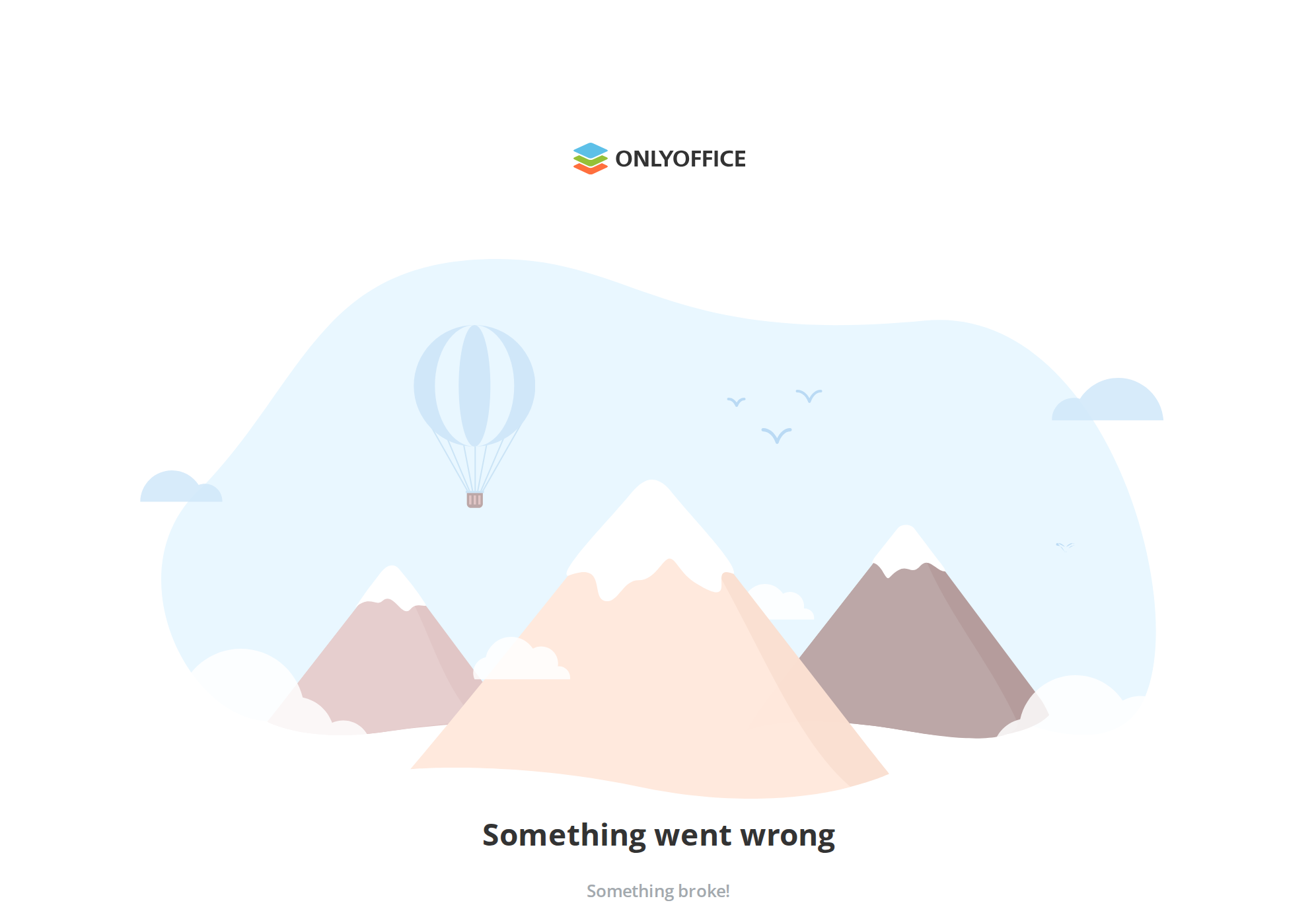
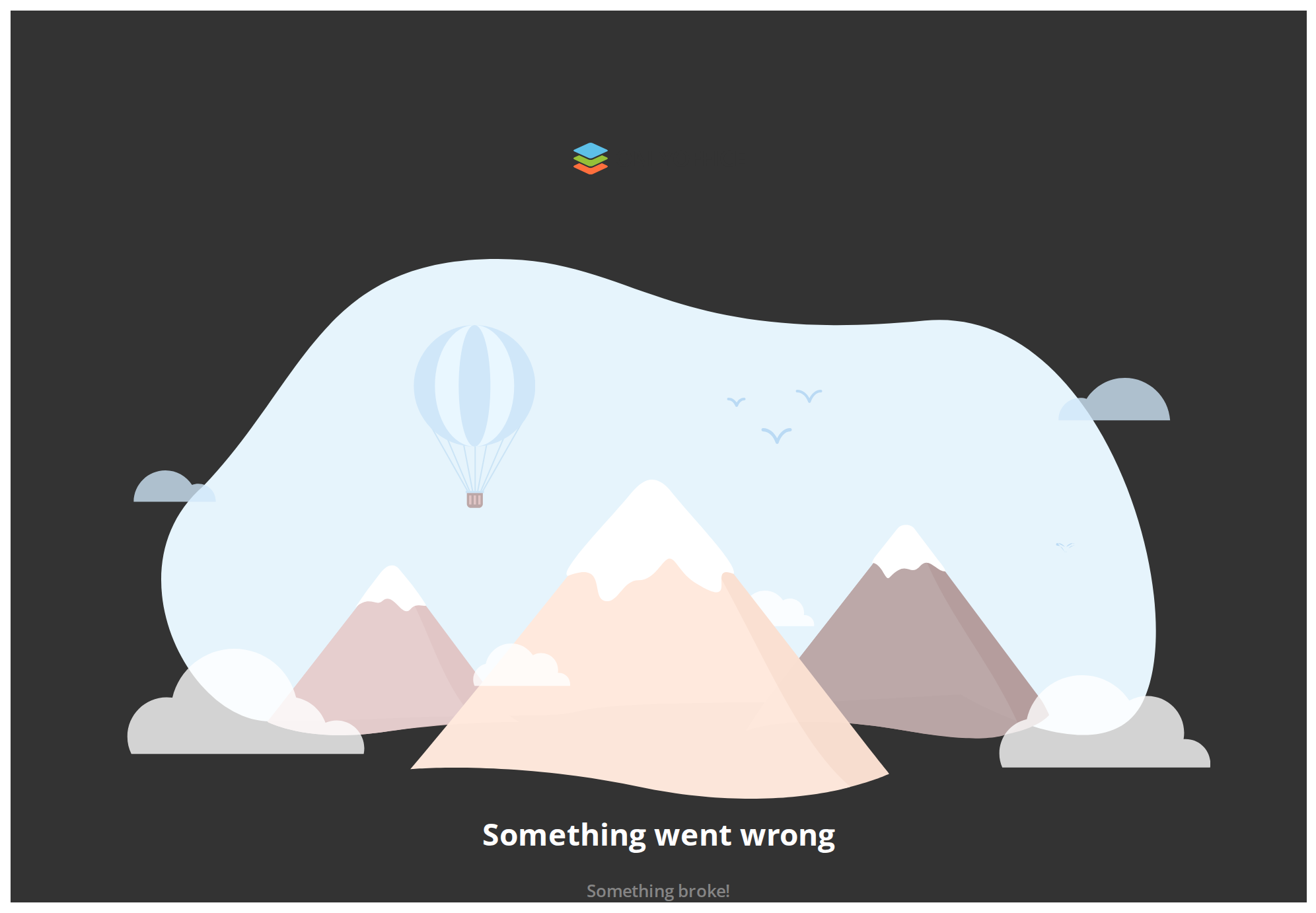
When a child component throws, the default ErrorContainer fallback is rendered.
With Custom Fallback
A custom ReactNode can be provided as fallback for a fully customized error UI.

With Render Function Fallback
A render function receives the caught error, enabling dynamic fallback UI based on the error.

Minimal example
import { ErrorBoundary } from "@onlyoffice/apps-ui-kit/providers/error-boundary";

function Panel() {
  return <div>panel</div>;
}

export function App() {
  return (
    <ErrorBoundary>
      <Panel />
    </ErrorBoundary>
  );
}
Props
Recipes
A fallback of your own
Anything renderable does. This is the usual form when the region has a natural empty state.
import { ErrorBoundary } from "@onlyoffice/apps-ui-kit/providers/error-boundary";
import { Text } from "@onlyoffice/apps-ui-kit/components/text";

export function Members({ children }: { children: React.ReactNode }) {
  return (
    <ErrorBoundary fallback={<Text>The member list could not be shown.</Text>}>
      {children}
    </ErrorBoundary>
  );
}
A fallback that reads the error
Pass a function to show what went wrong. Weigh that against who is looking: an error message is written for whoever wrote the code, not for whoever is using the page.
import { ErrorBoundary } from "@onlyoffice/apps-ui-kit/providers/error-boundary";
import { Text } from "@onlyoffice/apps-ui-kit/components/text";

export function Debuggable({ children }: { children: React.ReactNode }) {
  return (
    <ErrorBoundary fallback={(error: Error) => <Text>{error.message}</Text>}>
      {children}
    </ErrorBoundary>
  );
}
Reporting
onError is the only place the error is offered to you. The boundary logs nothing of its own,
so without this handler a caught error leaves no trace beyond the fallback on screen.
import { ErrorBoundary } from "@onlyoffice/apps-ui-kit/providers/error-boundary";

export function Reported({ children }: { children: React.ReactNode }) {
  return (
    <ErrorBoundary
      onError={(error, info) => {
        console.error(error, info.componentStack);
      }}
    >
      {children}
    </ErrorBoundary>
  );
}
Behaviour the types don't state
- It never recovers. There is no reset prop and no retry: once a throw is caught, the
boundary renders its fallback for as long as it is mounted. Remount it — a changing
keyis the usual way — to try the subtree again. - The default fallback is untranslated English. "Something went wrong" is written into the
component and is not a prop, so an interface in any other language shows one English heading at
the worst possible moment. Pass
fallbackif that matters. - The error's
messageis shown to the reader by that default fallback, verbatim. For a failure carrying anything internal, replace it rather than letting it through. - A throw with no error object still renders the fallback, as
new Error("Unhandled exception")— sofallbackas a function always receives anError, neverundefined. onErrorreceives React'sErrorInfo, whosecomponentStackis the useful half; the boundary does not touch it.- Only rendering, lifecycle and constructors are covered. This is React's rule, not the kit's: an error thrown from an event handler or a timer passes straight through to the window.
Accessibility
- The fallback replaces the subtree without moving focus. If focus was inside what threw, it falls back to the document body and the reader is left without a position — move it deliberately when the region was interactive.
- Nothing announces the swap. A fallback that matters should say what happened in text, in a region the reader will reach, rather than relying on the visual change alone.
- The default fallback renders
ErrorContainerand inherits its semantics.
Related
ErrorContainer— what the default fallback is.ThemeProvider— needed above it for that fallback to be styled.TranslationProvider— the other provider an application mounts.